Best College for MBA Hospital Administration in Indore and Madhya Pradesh
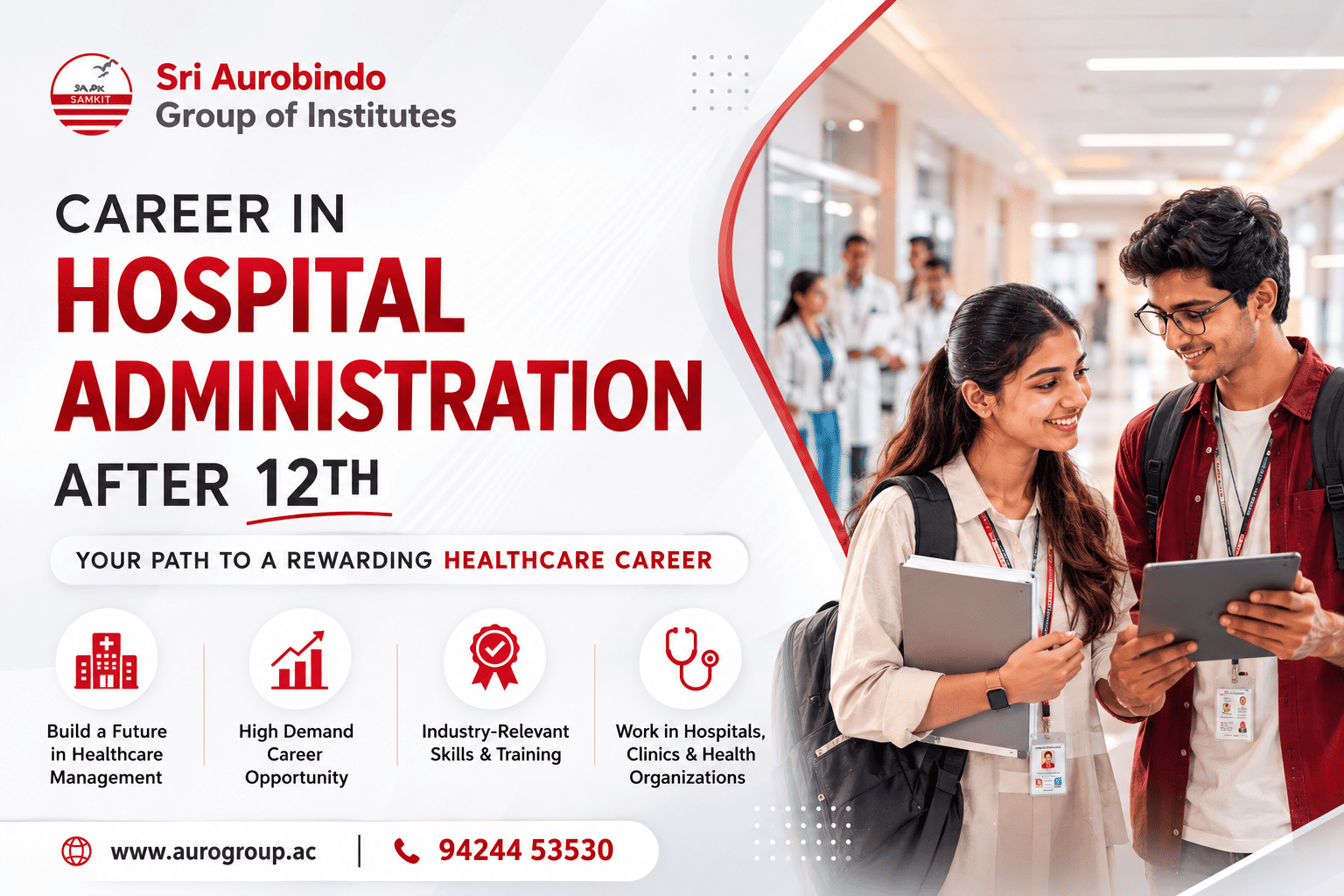
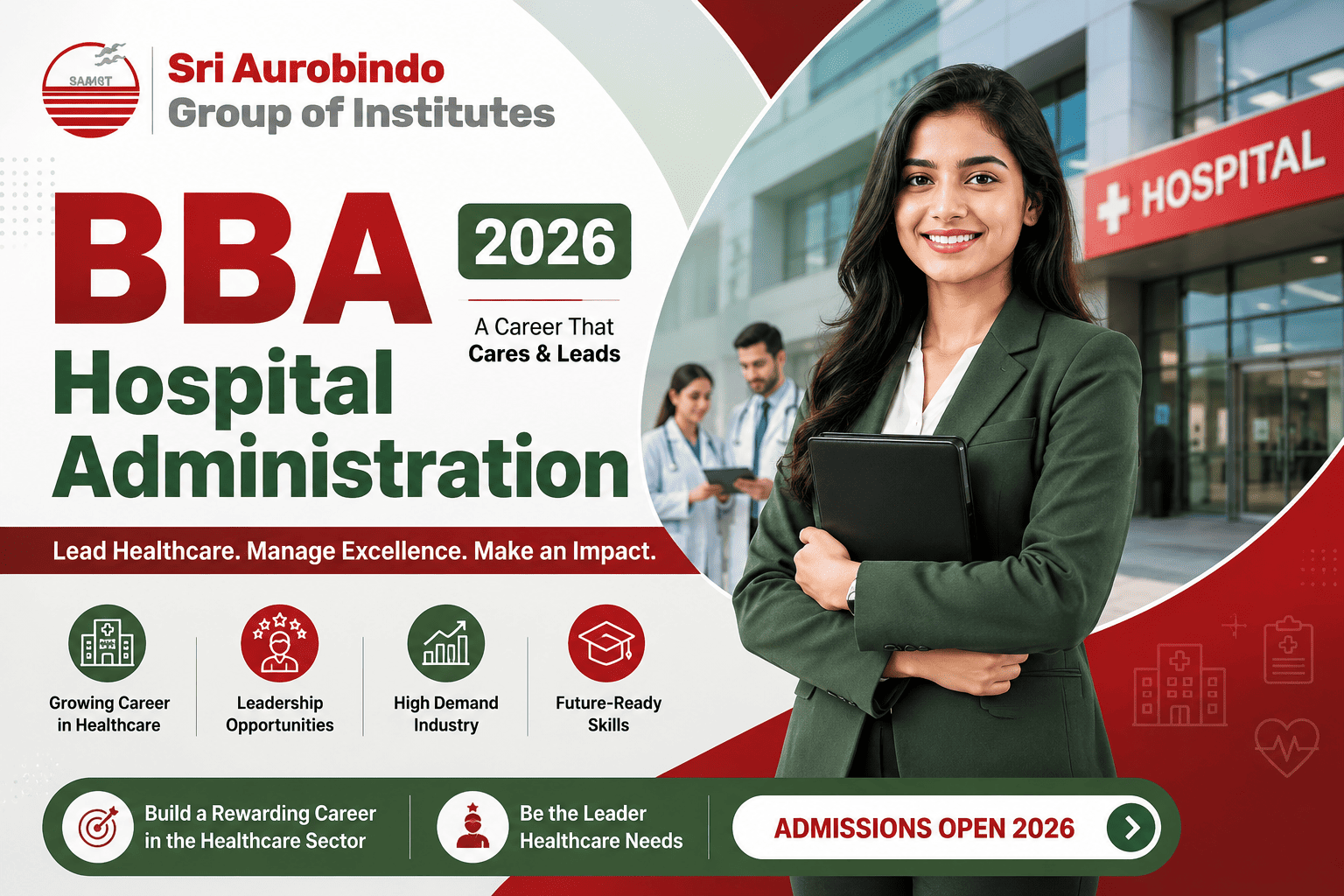
MBA Hospital Administration prepares students to manage hospitals and healthcare institutions with confidence and skill. The scope is rising rapidly across India due to expanding healthcare infrastructure. With practical learning and real exposure, SAIM&S stands out as a strong choice for this specialization.

Healthcare is no longer just about medical treatment, but it is about systems that make treatment efficient, cost-effective, safe, and patient-friendly. Hospitals today require executives who understand administration, data, finance, quality, operations, and policies. That’s the reason the MBA in Hospital Administration has seen a massive rise in demand, especially in central India, including Indore.
How the Healthcare Industry is Changing — And Why It Matters
Hospitals now operate like structured corporate setups. Departments such as quality control, insurance coordination, procurement, HR, facilities, biomedical equipment, digital health monitoring, etc., need trained managers. A decade ago, such roles were manual and less specialized — today they require strategic professionals.
India is building:
-
More multi-speciality hospitals
-
NABH-accredited centres
-
Healthcare tech companies
-
Medical tourism hubs
-
Diagnostic chains
-
Insurance integrations
Administrators with managerial and healthcare knowledge are now indispensable, not optional.
Who is MBA Hospital Administration meant for?
This is the right field for students who:
-
Prefer leadership roles rather than clinical roles
-
Want structured growth in the healthcare sector
-
Feel confident with operations, coordination, and decisions
-
Enjoy management, planning, and organisational skills
-
Want careers that make a real social impact
You don’t have to be a doctor, and you don’t need medical experience. What you need is clarity and the willingness to learn healthcare administration principles.
What You Actually Learn (Not Just Theory)
A realistic Hospital Administration MBA includes:
-
Hospital operations planning
-
Quality accreditation (like NABH)
-
Healthcare policy understanding
-
Budgeting and procurement
-
Patient service management
-
Insurance and TPA coordination
-
Human resource management
-
Medical record management
-
Technology and digital health systems
Students also get real exposure to:
-
OPD and IPD workflows
-
Emergency and critical care operations
-
Pharmacy, lab, and radiology departments
-
Patient admission → discharge cycle
-
Sterilization and infection control
-
Biomedical equipment maintenance
This practical understanding matters more than just passing subjects.
Career Prospects After an MBA in Hospital Administration
Hospital Administration graduates do not limit themselves to “just working in hospitals.”
They hold roles like:
-
Operations Manager
-
Hospital Administrator
-
Quality Coordinator
-
Healthcare Project Manager
-
Medical Insurance Manager
-
Healthcare Data Analyst
-
Clinic Chain Operations Head
-
Diagnostic Centre Manager
-
Public Health Consultant
The industry is large enough for you to decide whether you want a clinical-linked pathway or a pure management pathway.
Average Salary Trends
Fresh graduates typically start between ?4 LPA to ?7 LPA, depending on exposure.
Within a few years, professionals rise to managerial roles where packages can reach ?10 LPA to ?18 LPA.
More importantly, this sector is not vulnerable to seasonal or economic fluctuations because healthcare is a necessity.
Why Indore is One of the Best Places for Hospital Administration Studies
Indore has:
-
Established hospital networks
-
Insurance-based medical setups
-
Referral medical hubs
-
Digital health adoption
-
Increasing accreditation awareness
-
The booming medical tourism influence
For training, exposure, internships, and placements, Indore has more diversity than many Tier-1 cities.
Choosing the Right College Matters More Than Students Realize
MBA Hospital Administration becomes valuable only when:
-
The institute provides real hospital exposure
-
Students learn practical operations
-
The faculty has healthcare experience
-
Internship & placement support is strong
-
Curriculum adapts to modern hospital demands
This is where Sri Aurobindo Institute of Management & Science (SAIM&S) is recognised strongly.
MBA in Hospital Administration at Sri Aurobindo Institute of Management & Science (SAIM&S)
SAIM&S ensures that students understand not just theoretical hospital administration, but the actual on-floor functioning of healthcare.
Students benefit from:
-
Structured training with healthcare exposure
-
Industry-aligned curriculum
-
Experienced faculty from the hospital sectors
-
Real-time operational learning
-
Internship opportunities
-
Placement support
Students graduate as professionals ready to sit in hospital decision-making rooms — not just administrative offices.
Latest News and Events