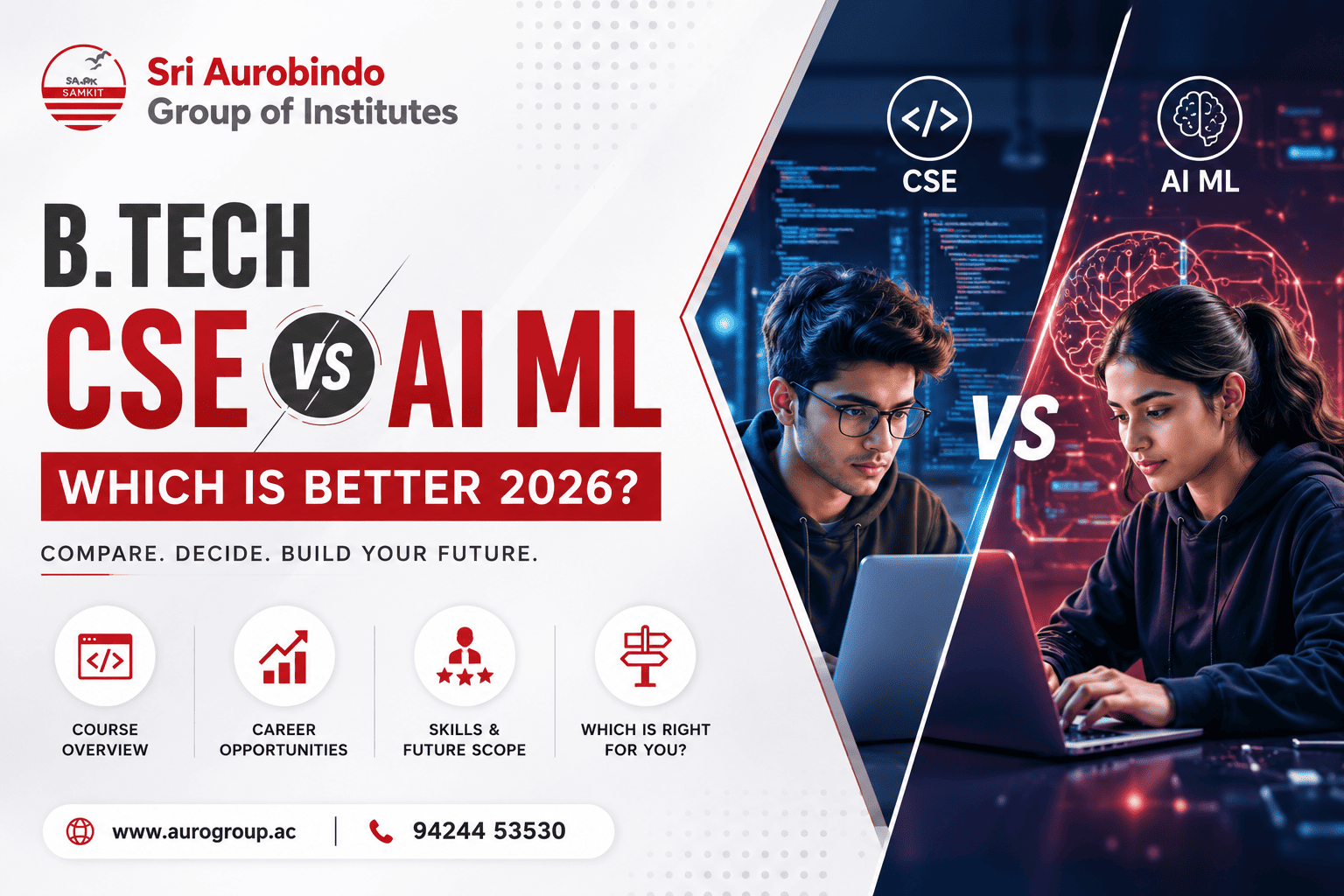
B.Tech Artificial Intelligence and Machine Learning Syllabus & Career Scope in India 2026
Artificial Intelligence and Machine Learning are reshaping how technology is built and used across industries in India. For students planning engineering admissions in 2026, B.Tech in AI and ML has emerged as a future-focused option with strong career potential. This blog explains the actual syllabus, skills students develop, and realistic career opportunities after graduation.
Artificial Intelligence and Machine Learning are no longer niche technologies limited to research labs or global tech giants. In India, they are now deeply integrated into everyday systems, from banking apps and healthcare platforms to smart manufacturing and cybersecurity. As a result, B.Tech in Artificial Intelligence and Machine Learning has become one of the most sought-after engineering programs for students planning their future in 2026 and beyond.
This guide explains what students actually study in an AI and ML engineering degree, how the syllabus evolves over four years, and what kind of real-world career opportunities open up after graduation in India.
Understanding AI and ML in an Engineering Context
Artificial Intelligence focuses on creating systems that can simulate human intelligence, such as reasoning, decision-making, perception, and language understanding. Machine Learning, a core part of AI, deals with algorithms that learn patterns from data and improve automatically over time.
The
B.Tech program in AI and ML is not about using ready-made tools. It is about understanding how intelligence is built, trained, tested, and deployed in real systems. Students are trained to think like engineers, not just users of technology.
What Is Taught in B.Tech AI & ML: A Realistic Year-Wise Overview
Foundation Years: First and Second Year
The initial phase focuses on building strong engineering fundamentals. Students study programming logic, mathematics, and computational thinking, which are essential before touching advanced AI concepts.
Core focus areas include:
-
Programming using languages like C, Python, and Java
-
Engineering mathematics, including linear algebra, probability, and statistics
-
Data structures and algorithms
-
Digital systems and computer architecture
-
Database management systems
-
Operating systems
These subjects may not sound “AI-heavy”, but they form the backbone of every serious AI engineer’s skillset.
Specialization Phase: Third Year
This is where AI and ML become central to the curriculum. Students move beyond basic coding and start working with data, models, and algorithms that learn and predict.
Key areas generally covered:
-
Machine learning algorithms and model building
-
Supervised and unsupervised learning techniques
-
Data preprocessing and feature engineering
-
Introduction to neural networks
-
Artificial intelligence principles and reasoning
-
Basics of natural language processing
-
Computer vision fundamentals
Students begin to understand how AI systems behave in real environments and why accuracy, bias, and validation matter.
Application and Industry Readiness: Final Year
The final year is focused on implementation, problem-solving, and deployment. This is where students transition from learners to professionals.
Advanced topics include:
-
Deep learning and neural network architectures
-
Reinforcement learning
-
AI ethics and responsible AI
-
Cloud-based AI deployment
-
Big data analytics
-
AI integration with IoT and cybersecurity
-
Final-year industry or research projects
At this stage, students are expected to build functional systems, not just write academic code.
Skills Students Develop Alongside the Syllabus
A strong AI and ML engineering program helps students develop:
-
Analytical and logical thinking
-
Data interpretation skills
-
Model evaluation and optimization
-
Problem decomposition
-
Ethical and responsible technology usage
-
Collaboration and communication skills
These skills are what employers value more than marks alone.
Career Scope After B.Tech AI & ML in India (2026 and Beyond)
AI and ML graduates are not restricted to one type of job. The scope is wide and continuously expanding.
Common career paths include:
-
Machine Learning Engineer
-
AI Software Developer
-
Data Analyst or Data Scientist
-
AI Research Assistant
-
Computer Vision Engineer
-
NLP Engineer
-
Automation Engineer
-
Cloud and AI Integration Specialist
-
Cybersecurity Analyst with AI expertise
Industries hiring AI and ML engineers include IT services, healthcare, fintech, automotive, manufacturing, defence, e-commerce, media, and government-backed technology initiatives.
Salary Expectations in the Indian Market
Fresh graduates typically start with packages ranging from ?5 LPA to ?10 LPA, depending on skills, projects, and internships. With experience, professionals move into higher roles where compensation grows significantly.
What matters most is practical capability, not just the degree title.
Who Should Choose B.Tech AI & ML?
This program is best suited for students who:
-
Enjoy logic and problem-solving
-
Are curious about how intelligent systems work
-
Are willing to continuously learn and adapt
-
Want to work on future technologies rather than static systems
AI and ML are not shortcut careers. They reward depth, patience, and consistent learning.
Choosing the Right Institute Matters More Than the Course Name
The same syllabus can produce very different outcomes depending on:
-
Faculty expertise
-
Exposure to real projects
-
Industry interaction
-
Internship opportunities
-
Practical lab infrastructure
This is why students must look beyond just course titles while choosing an institute.
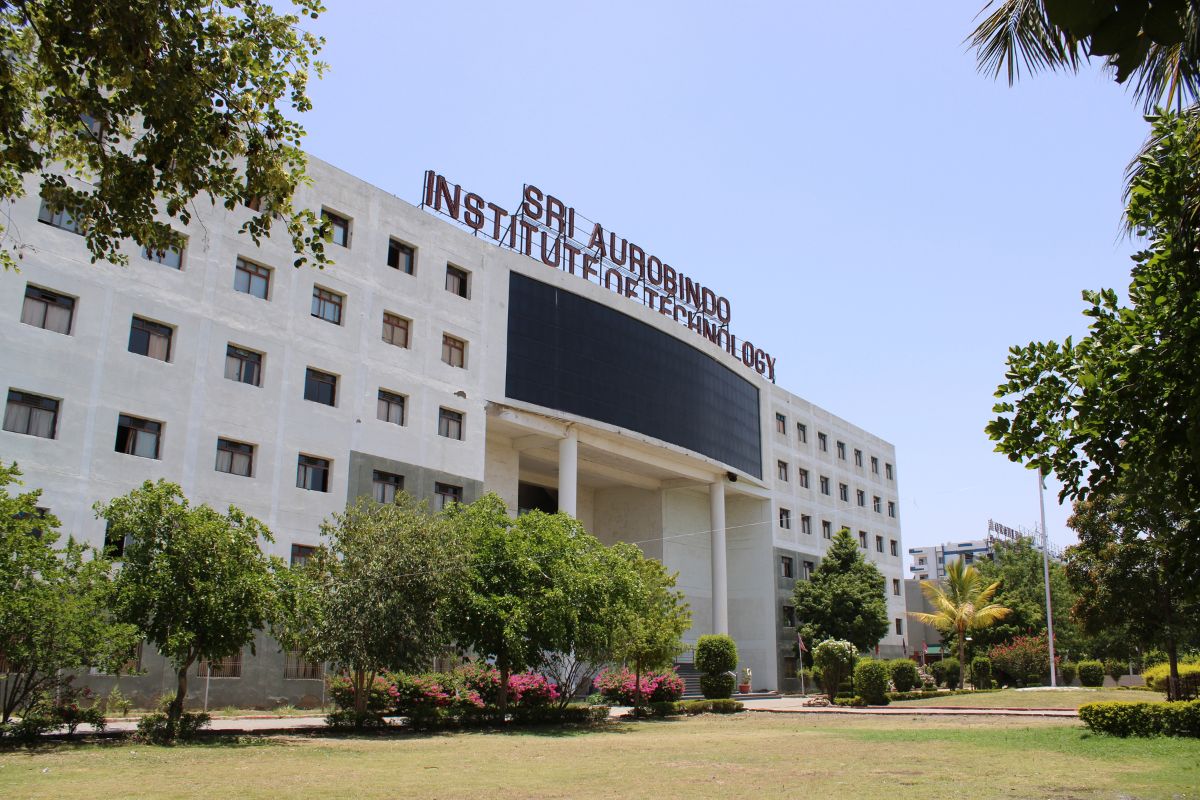
B.Tech AI & ML at Sri Aurobindo Institute of Technology (SAIT), Indore
At Sri Aurobindo Institute of Technology (SAIT), the focus is on building engineers who can apply AI and ML concepts to real-world problems. The learning environment emphasizes strong fundamentals, continuous practice, and industry relevance. Students pursuing Computer Science with AI and ML at SAIT are encouraged to develop technical depth, participate in projects, and prepare for evolving industry requirements rather than just exam performance.
Final Thoughts
Artificial Intelligence and Machine Learning will continue to redefine how industries function in India. B.Tech in AI and ML, when pursued with the right mindset and training, offers long-term career stability and growth. For students planning engineering education in 2026, understanding the syllabus, skill expectations, and career outcomes clearly is the first step toward making the right decision.
Latest News and Events