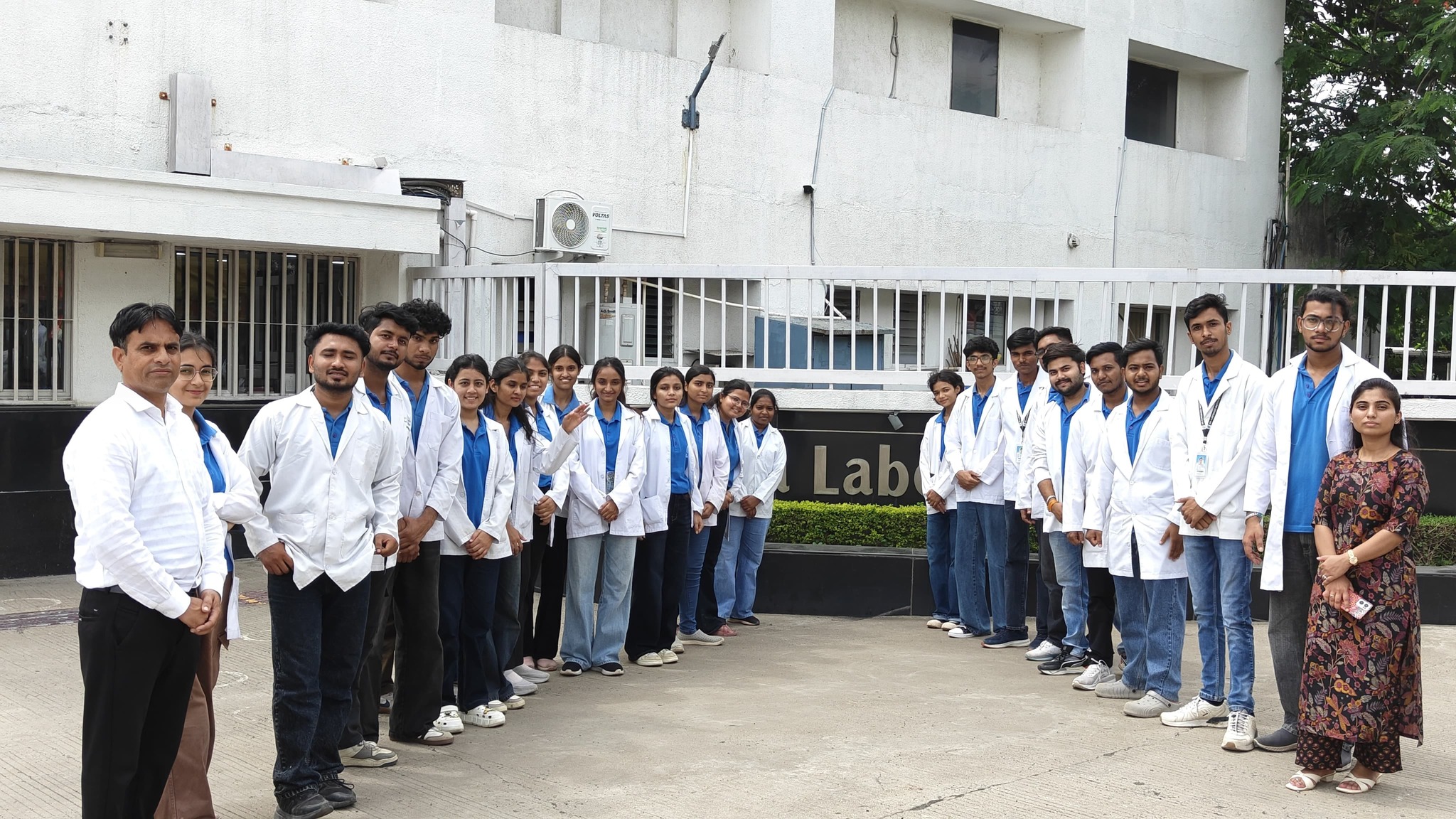
At Sri Aurobindo Institute of Pharmacy, learning extends far beyond the classroom. While textbooks provide the theoretical foundation, real industry exposure helps students understand how pharmaceutical concepts are applied in practice. With this objective, the Training & Placement Cell organized an industrial visit to IPCA Laboratories Ltd., Pithampur for 25 B.Pharm students.
The visit was coordinated by Ms. Megha Wanare from the Training & Placement Department and Mr. Arjun Patidar, Assistant Professor, with technical guidance from Mr. Satish Tomar of IPCA Laboratories. It offered students an opportunity to witness the workings of one of India's leading pharmaceutical manufacturing facilities and gain practical insights into industrial processes, quality systems, and professional work culture.
Understanding the Backbone of Pharmaceutical Manufacturing
The visit began with an introductory session where students were familiarized with IPCA Laboratories' manufacturing practices, quality standards, and commitment to producing safe, effective, and high-quality medicines.
Students were then taken through several critical utility and operational departments that form the backbone of pharmaceutical production.
Boiler House
The first stop was the Boiler House, where students learned how steam is generated and distributed across manufacturing units. They observed how steam plays a crucial role in pharmaceutical production processes and why maintaining a continuous, reliable utility supply is essential for smooth plant operations.
Water Treatment Plant (WTP)
Water is one of the most critical raw materials in pharmaceutical manufacturing. During the visit to the Water Treatment Plant, students gained an understanding of how water is purified to pharmaceutical-grade standards. They also learned how maintaining strict water quality is vital for ensuring product safety and regulatory compliance.
Scrap Yard and Waste Management
Students visited the Scrap Yard to understand how industrial waste is systematically collected, segregated, and disposed of. This session highlighted the importance of responsible waste management practices in maintaining both operational efficiency and environmental sustainability.
Effluent Treatment Plant (ETP)
A visit to the Effluent Treatment Plant provided valuable insights into wastewater treatment before its safe discharge into the environment. Students witnessed how environmental protection measures are integrated into pharmaceutical manufacturing and how industries ensure compliance with environmental regulations.
Learning the Importance of Quality Assurance and Quality Control
One of the most enriching parts of the visit was the interaction with the Quality Assurance (QA) and Quality Control (QC) departments.
Students learned how the QA team ensures that every manufacturing process complies with Good Manufacturing Practices (GMP) through proper documentation, validation, standard operating procedures, and quality management systems.
The QC team demonstrated how raw materials, in-process samples, packaging materials, and finished pharmaceutical products undergo rigorous testing before reaching patients. These sessions reinforced the critical role of quality systems in safeguarding public health.
Interactive Technical Session with Industry Experts
Following the plant tour, students participated in a 30-minute interactive technical session conducted by industry professionals.
The discussion focused on current trends in pharmaceutical manufacturing, workplace expectations, career opportunities, and the skills required to thrive in the industry. Students actively engaged with the experts, asked insightful questions, and received valuable guidance on building successful careers in the pharmaceutical sector.
Key Takeaways from the Visit
The industrial visit helped students develop a practical understanding of several important aspects of pharmaceutical manufacturing, including:
- The role of utility systems in uninterrupted production.
- The importance of pharmaceutical-grade water and steam generation.
- Industrial waste management and environmental sustainability practices.
- Quality Assurance and Quality Control systems.
- Documentation, GMP compliance, and regulatory requirements.
- Workplace discipline, teamwork, safety, and professional ethics.
Bridging the Gap Between Theory and Practice
Industrial exposure plays a significant role in shaping future pharmacy professionals. Seeing industrial operations firsthand allows students to connect classroom concepts with real-world applications, making learning more meaningful and comprehensive.
The visit to IPCA Laboratories successfully bridged the gap between academic learning and industrial practice. It enhanced students' understanding of pharmaceutical manufacturing processes, quality management systems, environmental responsibility, and industry expectations.
Preparing Students for Industry Success
At Sri Aurobindo Institute of Pharmacy, experiential learning remains an integral part of student development. Industrial visits such as this equip students with practical knowledge, professional confidence, and a deeper appreciation of the standards that define the pharmaceutical industry.
The visit to IPCA Laboratories was not only an educational experience but also an inspiring one. It encouraged students to envision their future careers within the pharmaceutical sector while reinforcing the importance of quality, compliance, innovation, and responsibility in healthcare manufacturing.
As the pharmaceutical industry continues to evolve, such industry interactions ensure that students graduate with the practical exposure, technical awareness, and professional mindset needed to become competent and responsible healthcare professionals.